












NIGERIA’S 2026 BUDGET: TINUBU UNVEILS ₦58.18 TRILLION ‘PLAN FOR PROSPERITY’ AMID ECONOMIC RECOVERY
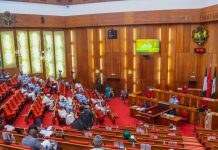
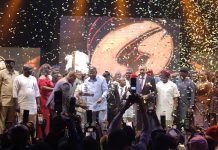
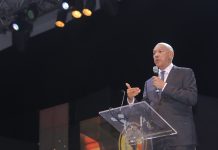
ABUJA – President Bola Ahmed Tinubu on Friday presented a ₦58.18 trillion “Budget of Consolidation, Renewed Resilience, and Shared Prosperity” to a joint session of the National Assembly. The 2026 fiscal plan aims to shift the gears of the Nigerian economy from painful but necessary reforms toward visible improvements in the living standards of citizens.
In an address marked by both empathy and resolve, the President acknowledged the hardships Nigerians have faced due to recent structural changes. “The path of reform is seldom smooth,” Tinubu stated, “but it is the surest route to lasting stability.”
Signs of an Economic Turnaround
The President highlighted several key indicators suggesting that the administration’s “Renewed Hope” agenda is beginning to bear fruit:
* Economic Growth: The economy grew by 3.98% in the third quarter of 2025.
* Inflation Control: Headline inflation dropped significantly to 14.45% in November 2025, down from over 24% earlier in the year.
* Foreign Reserves: Nigeria’s buffers reached a seven-year high of $47 billion, enough to cover 10 months of imports.
The 2026 Numbers at a Glance
The budget is built on what the President described as “conservative and realistic” assumptions, including an oil price of $64.85 per barrel and an exchange rate of ₦1,400 to the US Dollar.
| Category. | Amount |
| Total Expenditure | ₦58.18 Trillion |
| Expected Revenue | ₦34.33 Trillion |
| Capital Expenditure | ₦26.08 Trillion |
| Debt Servicing | ₦15.52 Trillion |
| Budget Deficit | ₦23.85 Trillion
(4.28% of GDP)
A New War on Terror
A standout feature of the President’s speech was a stern “zero-tolerance” policy regarding national security. President Tinubu announced a new counter-terrorism doctrine that expands the definition of “terrorist” to include anyone wielding unauthorized weapons.
Under this new architecture, bandits, kidnappers, and ethnic militias are officially classified as terrorists. Crucially, the President warned that “political protectors, traditional rulers, and community leaders” who facilitate or negotiate for these groups will also be treated as terrorists. To back this, ₦5.41 trillion has been allocated to Defence and Security to modernize the Armed Forces.
Investing in People and Infrastructure
The President emphasized that “no nation can grow beyond the quality of its people,” dedicating significant portions of the budget to social sectors:
* Education (₦3.52 Trillion): Focus remains on the Nigerian Education Loan Fund (NELFUND), which has already supported over 418,000 students.
* Health (₦2.48 Trillion): This represents 6% of the total budget, bolstered by an additional $500 million in grant funding from the United States for targeted interventions.
* Infrastructure (₦3.56 Trillion): Funds are earmarked for completing ongoing road, rail, and port projects to unlock private investment.
Strict Discipline and Accountability
President Tinubu issued a direct warning to Government-Owned Enterprises (GOEs), stating that 2026 would be a year of “stronger discipline.” He directed the full digitization of revenue collection to seal leakages and ensure that every naira spent delivers public value.
“The greatest budget is not the one we announce; it is the one we deliver,” the President concluded, calling for unity between the executive and legislative branches to ensure the budget is implemented effectively for the benefit of all Nigerians.
The National Assembly is expected to begin deliberations on the “Appropriation Bill” immediately to ensure a timely start to the 2026 fiscal year.