





















FEDERAL EXECUTIVE COUNCIL APPROVES ₦58.47 TRILLION BUDGET FOR 2026; SHIFTS FOCUS TO NON-OIL REVENUE
The Federal Executive Council (FEC) has officially approved the 2026 budget proposal, totaling ₦58.47 trillion, for onward transmission to the National Assembly. The decision was reached during a one-item extraordinary FEC meeting presided over by President Bola Ahmed Tinubu on Friday.
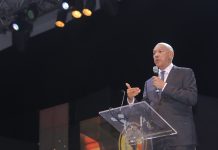
Addressing the press following the session, the Minister of Information and National Orientation, Mohammed Idris, noted the urgency of the briefing, stating that the President was prepared to transmit the fiscal document to the legislature immediately following the council’s endorsement.
Revised Macroeconomic Framework
A significant highlight of the meeting was the amendment of the Medium-Term Expenditure Framework (MTEF). The Minister of Budget and Economic Planning, Senator Abubakar Bagudu, revealed that the council approved a downward revision of the exchange rate benchmark.
“We proposed a revision of the exchange rate from ₦1,512 to ₦1,400 to the dollar,” Bagudu stated, noting that this adjustment led to consequential changes in the overall budget size to ensure the proposal remains realistic in the face of current economic realities.
Budget Breakdown and Priorities
The Director General of the Budget Office, Tanimu Yakubu, provided a granular breakdown of the ₦58.47 trillion aggregate expenditure, which represents a 6% increase over the 2025 estimate.
The 2026 fiscal plan allocates:
* Debt Service: ₦15.52 trillion (including ₦318.54 billion for a sinking fund to retire maturing bonds).
* Personnel & Pensions: ₦10.75 trillion (a 7% increase from the previous year).
* Capital Expenditure: ₦25.68 trillion.
* Statutory Transfers: ₦4.1 trillion.
* Overhead Costs: ₦2.22 trillion.
Notably, capital expenditure is 1.8% lower than the 2025 provision. Yakubu explained that this reflects a “conservative approach” aimed at prioritizing the completion of ongoing projects rather than starting new ones, ensuring value for money.
Structural Shift from Oil.
In a move that signals a changing tide for Nigeria’s economy, the 2026 budget confirms a structural shift away from oil dependence. Despite a year-on-year decline in total revenue, non-oil revenues driven by corporate tax, VAT, and customs now account for approximately two-thirds of total receipts.
“The 2026 budget reflects a deliberate balance between macroeconomic stabilization and development imperatives anchored under the Renewed Hope Agenda,” Yakubu said. He further clarified that while the deficit remains large due to “legacy fiscal rigidities,” the government would rely on domestic borrowing and concessional multilateral loans for financing rather than discretionary policy loosening.
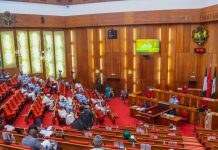
The budget proposal is expected to be laid before a joint session of the National Assembly by the President later today, kickstarting the legislative defense and approval process.